In late October, I had the chance to speak at Florida Dreamin’ on Building an M&A Framework for Success with Rebecca Gray from Capstorm.
If you’d like to view a recap of this presentation, you can view it below:
During the presentation, we also shared some Resources you can use in your own company to to help with building your own framework for success.
M&A Workshop Planning This planning document supports an initial Workshop to understand the acquired company’s current lead to cash process. This will lay the foundation for the development of the Go-Live checklist.
CRM M&A Acquisition Project Overview and Go-Live Checklist Includes an overview of the individual components that can help you gauge the overall status of your project and can help you determine what “Project Done” looks like. It also includes the go-live checklist, a generic project plan for M&A migrations across the lead to cash process.
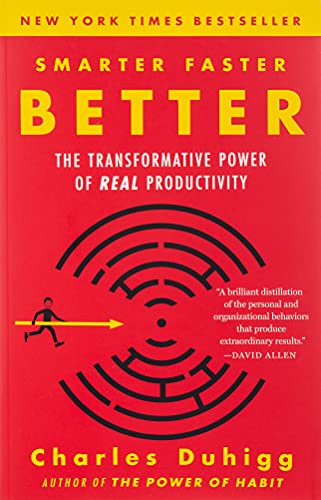
I’ve been trying to read more Personal Development books this year (instead of just the latest Star Wars novel – on a sidenote, The High Republic books are REALLY GOOD!) and finished “Smarter Faster Better” by Charles Duhigg recently.
I wanted to share some of my takeaways from the book since it resonated deeply with me related to Motivation. With Social Media, you see other people doing BIG THINGS and it’s easy to get envious. With smartphones, Netflix, video games, Instagram (and the list goes on) it’s easy to get endless distracted. So how can you take a “pause” and find a way to motivate yourself and your own goals? Here is a mix of my own thoughts and topics he covers in the book.
First, find an INTERNAL “locust of control.” Tell yourself you can (and WILL) control your destiny. Find one small thing you can do to start working towards a goal. For me, it is learning to code. Code has always scared me. It looks like complete nonsense to me. But if I want to reach my #journeytoCTA goal it means I need to actually learn the “Technical” in CTA. So I started with Apex Academy (thank you David Liu and SFDC99), bought the Focus on Force study guides and practice exams for Platform Developer I, and started small.
Your Action: Make one small decision to put you on the path to your goals.
Second ask yourself the “Why?” Why do you want to achieve that goal? Is it to enter a new career and find new passion and inspiration? Is it to better provide for your family by being able to increase your salary? For me, it’s being able to provide for my family, and find a career where I can make a meaningful difference – which I find in the Salesforce Ohana.
Your Action: Make a list of 3 reasons why you want to achieve the goal from Step 1.
Third, try and think different. Coding is hard for me. But instead of thinking I’m learning something HARD I think I’m learning something invaluable. This leads to a focus on Mental Models. I can see myself learning to code, going through Apex Academy and study guides and Trailhead learning more and passing the Platform Developer I exam.
Your Action: How can you think different about your goal to help you find the motivation? Build that Mental Model where you see yourself succeeding.
Fourth, GOALS on your path to your Goals. Have both short-term and long-term goals. Those small short term goals give you “Cognitive Closure” to help motivate you on the path to larger goals. That small goal can be “review this section” in the Focus on Force study guide but you can find satisfaction in completing it.
Your Action: Name 1 short-term (next 1 year), 1 mid-term (next 3 years) and 1 long-term (next 5 years) goals.
Fifth, find someone to help motivate you and encourage you. If you hang around people who focus on distractions you will focus on distractions.
You Action: Find someone in the Ohana who can help encourage you.
I hope you feel motivated by this post. I feel motivated writing it! Now excuse me, I’m going to do some studying for Platform Developer I.
When you walk into the office each day, you see your coworkers and make small talk about the weather or the family as you each get a cup of coffee.
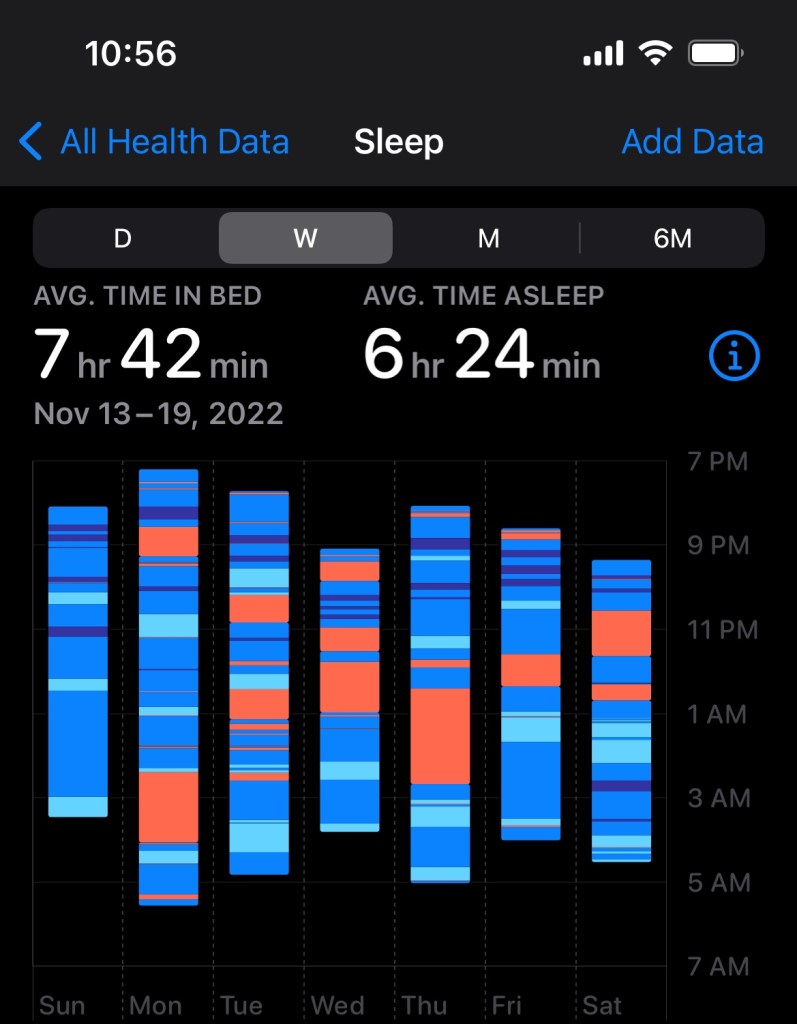
But none of us know everything that other person is going through. For me, we learned a few years ago that my daughter had sleep apnea. We had surgery done to help address it but my sleep was this for two years – the red bars showing when I was awake:
Those were some of the hardest years of my life but also some of the most productive and rewarding because I felt supported with kindness and empathy, without judgement
For those who’ve read my previous posts, I’ve talked about stopping things from becoming “THINGS” and a lot of that was in the context of helping work projects go more smoothly.
But lately I’ve been reflecting on WHY that philosophy works and it’s this:
Providing the people around you grace and kindness in their work projects, and making sure they feel heard and informed, shows you value them as human beings too.
For example, maybe someone forgot to get you something they promised to give you. A frustrating situation. But maybe it happened because the rest of their family got sick and they were playing doctor while trying to balance their workload. Or maybe they got some personal upsetting news. You don’t know.
But by being kind – “Hi! Have you happened to have a chance to look into this for me?” versus “Why didn’t you give that information to me like you said you would?” You’ve stopped it from becoming a THING by assuming good intentions.
So here’s my request:
Assume good intentions and focus on kindness and empathy at work today. I guarantee you will have a better day for it and more importantly your co workers will too!
Growing up, I loved the game of Telephone. It was always funny to hear how “The sky is blue” can somehow turn into “Johnny likes to eat ants.” (I’m pretty sure someone did that on purpose…)
Yum! Looks delicious right?
But in the Salesforce world, such miscommunication can have real world cost or revenue implications if the wrong thing is done. But making sure the “real” or final request is maintained can be hard when:
The original requester explains it to….
A Salesforce admin who brings in…
A Salesforce Business Analyst who…
Writes it up in a ticket with a specific structure that…
Gets reviewed and poked at on a sprint planning call to get…
Coded by developers who…
Send it to QA for testing…
Before UAT testing is done…
And code actually gets deployed that hopefully meets the business requesters “real” need.
UFF Dah.
Just try not to get your wires crossed with that many people involved!
On a call the other day, I got the greatest compliment from a business requester you can give someone in the Salesforce world: “You correctly listened to and understood my needs, and were able to explain it to another technical group.” Because in the Salesforce game of telephone, you want “The sky is blue” to still be “The sky is blue” at the end.
SO WHAT?
This week, I want you to practice ACTIVE listening. When someone is speaking to you, don’t think about what you are doing next – be PRESENT in the moment. No not thinking about Christmas presents, but present as in right there with the person you are talking to.
Listen to what they are saying to comprehend them. Repeat back your understanding to make sure it’s correct. This will make sure everyone is on the same page.
The best part? This will help you both personally AND professionally! Make sure you know the sky is blue… and no one is eating any ants!
My family loves Frozen. The movies, the songs, the books, and the Broadway show! I have two little girls who I hope have as strong of a friendship as Anna and Elsa do.
Sisters are the best – and so is the Salesforce Ohana
When we were listening to the soundtrack the other day, I realized so many of the songs have such great messages. So here are some Salesforce lessons we can learn from them.
Let it go:
Everyone makes mistakes sometimes. It is guaranteed to happen. From breaking a function for our users, to messing up a data import, you will make a mistake. When they happen, we need to let it go. Oftentimes dwelling on past mistakes only leads to more mistakes.
Be confident like Elsa in moving past your mistakes.
The next right thing:
When working on a project, there can often be a lot of people and tasks involved. It can often be overwhelming trying to keep track of who’s doing what and what comes next.
Sometimes, when a project is stuck, all you can do is stop and do the next right thing. What’s the one action you can take to move the project forward? What’s one action you can take to support a co-worker?
Lost in the woods:
Working with people (and data) can be hard, and I’m sure we have all felt lost sometimes. What’s important is to remember your purpose – helping your Salesforce users. That focus will guide you home.
It also helps to have a trusty companion like Sven by your side too!
In Summer:
During summer, take a break like Olaf and get gorgeously tan.
Taking a break, and enjoying the small things – like wish flowers – can do amazing things for your mental health.
Frozen Fever:
Don’t be stubborn like Elsa. If you are sick, take a break. Your teammates are there to help support you. Also, you never know what mistakes (like small mischievous little snowgies) will pop up when you don’t feel good and wreck everything you’ve been working on because you aren’t thinking straight.
Actual video of a Salesforce admin trying to catch their mistakes.
When I’m Older:
Starting out in the ecosystem can feel overwhelming. You see creepy things (like complicated Apex) everywhere and sometimes you just need to scream and let out some emotion. But as you grow and learn in the ecosystem, things WILL start to make more sense. Apex won’t be creepy, it will be a powerful tool.
Unfortunately for us and Olaf, everything doesn’t magically make sense when you get older. But you can keep learning and growing!
Into the Unknown:
Take a risk! Learn something new! Work on a project outside your comfort zone!
These growth opportunities are vital to advancing your career. It can help you unlock enhancements for your users, fix past mistakes (whether that be broken functionality or a trapped forest), and help you become a better version of yourself.
You never know what awaits you in the unknown – GO FOR IT!
Some things never change:
So many things about Salesforce and technology are always changing. AI is revolutionary, Salesforce is giving us new features 3x per year…it is a lot to manage.
But at the end of the day, the Salesforce Ohana and Trailblazer Comunity will always be there for you.
Even when you least expect it… the Ohana means family and family sticks together.
May today be a great day for you – full of Frozen songs, great relationships, new learnings, and progress for your users!
When I started Program Managing instead of business analayst-ing it was a tough transition. Going from sitting alone and thinking how to solve a problem to trying to coordinate (way too many!) other people trying to solve a problem was… a lot!
I’ve made some mistakes along the way, but am really enjoying and growing in the role so I wanted to share some tips that have helped me.
1. Realize you are NOT responsible for everything. Have clear agreements and due dates with your stakeholders who ARE responsible for getting things done. And let go of that internal pressure and stress you put on yourself.
2. Find a presentation style that suits you. Be respectful and professional but also be authentic – people know when you are trying to be “corporate-y”.
3. Request feedback constantly from everyone you work with on what you can do to improve. It will make you better AND help them know that you truly care.
4. Find programs focused on leadership and communication to grow – like Toastmasters.
Here is an image of a plant to show “growth” and break up the text.
5. LISTEN to the people involved. You are a source of change and stress for them – a little bit of grace and kindness, and an authentic desire to understand their concerns will reap dividends for your program.
6. Don’t COMMAND, Partner. Their success is literally your success- you are in it together.
7. Respect their time. Don’t ask 5 people the same question, and make sure each meeting is thought out and planned ahead of time.
8. Have fun. Programs can last months (or years!) causing burnout. Some fun along the way can help everyone keep going.
9. RESPECT the knowledge and contributions everyone brings to the table. Make sure you set up everyone you work with for success.
I hope these tips help you out! Writing this list was a good reminder for myself as well.
A manager once told me taking on a new role or responsibility is like a baby bird leaving the nest – to grow and thrive you have to be willing to take that first step. Learning to manage a program is a great tool to add to your skill set!
I was talking with some end users the other day, and was reminded of something I hate to admit I sometimes forgot:
ALWAYS ask yourself WHY am I collecting this piece of data?
As system architects/admins we love having Salesforce be a rich database of information. But we should always keep in mind that we want USEFUL information.
Data for the sake of data is an administrative burden and a nightmare of tech debt. It sits there draining time and energy and not adding value like a data black hole. It also frustrates end users and hurts adoption.
So how do we stop the black hole?
1. Set a reminder in your calendar (do it now!) to look at one object per month and think about how to simplify the amount of data. Start with Account and work down your related list. (When are you doing it?)
2. In your training and documentation, don’t just include what is being captured, include WHY it is being captured. That way you have business requirements built in and can more easily identify when something may no longer be relevant.
3. Whenever you have to adjust a pick-list, run a quick analysis and see what values are being used (or not used!) and clean up accordingly.
Taking 5 minutes now to purge some tech debt and document some use cases will save you hours of time later when you have to try to search through 5+ year old tickets for the business requirements of why something was done. Your future self will thank you!
Remember – we want Salesforce to be a stocking stuffed with presents (aka useful information) and not coal (aka tech debt junk!).
When planning for an M&A Lead to Cash Tech Stack Migration, the CRM migration has 7 individual components within an overall project scope.
These individual components can help you gauge the overall status of your project and can help you determine what “Project Done” looks like.
Accounts: Map the acquired company’s accounts to your accounts. This can be a central account database or your CRM. It is vital that a coordinated mapping is done between all internal systems using Account Data so ABC Company in the CRM is also ABC Company in Billing.
Products: Map the acquired company’s products into your company’s product database, and ensure all impacted parties agree on the structure. Sales needs to know how to sell the products, pricing needs to know how to price them, Operations needs to be able to implement them, and Billing needs to be able to invoice the customer.
Sales Users: User configuration, communication, and training. This is fundamental to ensuring a positive experience for these Users. These Users will help the company achieve the cross sell goals set and can help customers see the future vision for the merged company. Make sure it is a positive experience for them too.
Service Users: User configuration, communication, and training. This is fundamental to ensuring a positive experience for these Users. These Users resolve customer issues so creating a positive experience for them will help make it a positive experience for your customers.
System Configuration: This is the CRM configuration changes (pick list value changes, field additions, etc.) required to move in the acquired company.
Data Migration: Moving data from the legacy system into your CRM. Accounts, contacts, opportunities, etc.
Training and Post Live Support: Salesforce training is not a one and done activity. It is a two step activity. Step 1 is teaching them HOW TO USE THE SYSTEM. This is how you add a Contact, this is how you close an Opportunity, etc. Step 2 is HOW THEY USE THE SYSTEM. Helping them get the most value out of the system by making it work for them.
These 7 components can be used to report internally on the project status using a % completion measure and objective measures. 500/1000 Accounts have been mapped, 10 out of 15 products are set up, 10 out of 12 tickets for system configuration changes are done, etc
My next post will look at the Lead to Cash workshop (understand the acquired company’s current process) so the Go Live Checklist can be built (how to move their current process into your tech stack).
Just Remember: This is a marathon, not a sprint (even if you are working in Sprints!). Don’t try to rush this project. Get this DONE WELL, not just DONE.
A well done acquisition integration will bring new synergies and leave a positive taste in employee and customer mouths. A poorly handled migration can negatively impact employee motivation and productivity, and customer relationships.
It was a normal day at Widget Company Inc. Bob and Sarah were having a meeting to discuss a new product launch.
“Man am I excited for the launch of our Ultra Widget Deluxe!” Bob said. “That extra 3.6% of performance over the Ultra Widge Standard and 7.5% performance improvement over Ultra Widget Basic is gong to make a big difference.”
“I know!” Sarah shared, beaming with pride.
Later that week, after the product launched, their support agents started getting cases in. But there was one problem – they had no idea which product the case was for!
“Oh no! We can’t access reports about which product is going wrong!“
Back in his base, Salesforce Hero was doing Trailhead in his Astro Jammie’s when his Problem Radar detected a problem.
“Excuse me sir” said his voice assistant OHANA (Our Hero’s Awesome Never-Fails Assistant). “We have a serious problem that needs your help.”
Salesforce Hero jumped up, tapped his ASTRO costume change (Awesome Suit To Return Order) and flew off.
“Salesforce Hero we are so glad you are here!” Bob said. “We can’t track which product a case is about!”
“Have no fear, Salesforce Hero is here! Simply add a Product Lookup field to add the product to the case!”
“Wow that’s amazing! Thanks Salesforce hero!” Sarah said, standing and cheering.
“No problem! Your Salesforce Hero is always ready to help!”
*Cue triumphant exit music*
Narrator: Whenever there is a Salesforce problem, never fear Salesforce Hero will be there to SAVE THE DAY!
Note: This story does not take into account linking cases to assets or records of products purchased by a customer. This was me having fun at 3 AM!
I’ve had the joy of migrating 6(!!) acquired companies into our Salesforce org and am working on/planning for 5(!!!) more concurrently.
Integrating an acquired company into your Salesforce org is one of the biggest projects any Salesforce Admin, Business Analyst, Program Manager, or Developer can take on.
It almost has to be seen as a “full implementation” in terms of gathering business requirements, setting up users, making system configuration changes, training, etc. – so a MASSIVE undertaking.
I’m going to publish a series of blog posts on M&A to share what I’ve learned. So here is step 1: have a crystal clear set of guiding principles. Here is mine.
1. COORDINATION across the lead to cash tech stack to ensure a smooth transition. Each step is a link in the lead to cash chain and if one is broken it all falls apart.
2. TRANSPARENCY on what is happening when and why. You are moving a lot of people’s cheese. They deserve to understand what is changing (a new CRM!) when (keep them informed of migration dates) and why (one view of the customer).
3. ACCOUNTABILITY that you will follow through on what you tell them. Employees are a company’s biggest assets and the work we do during a CRM migration impacts the way people work each and every day, and their opportunity to close deals and provide for their family. Treat them with respect and honor your word.
4. STOP things from becoming “THINGS.” This is my personal favorite. It’s so easy to let something fester and blow up, especially with the intense stress of an acquisition and migration. By being TRANSPARENT, COORDINATED, and ACCOUNTABLE everyone can work together more efficiently.
So that is step 1 – your guiding principles. My hope is that these capture the basics to help you develop your framework. Future blog posts will look at the phases of a migration, the project components, and key tools to help plan and prepare for the migration.

















 Arch-Force: A Salesforce Blog